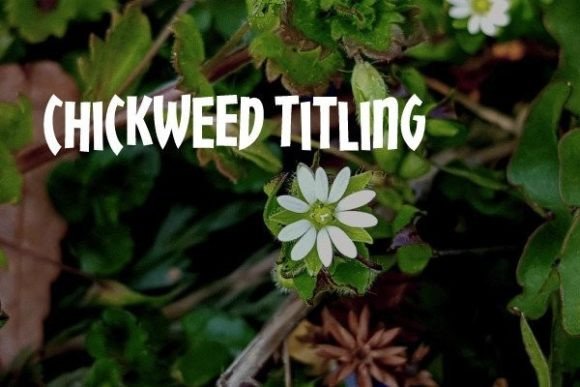
Chickweed Titling: A Craft-Friendly Display Font for Handmade Labels, Invitations & More
As a small business owner creating printable products, stickers, and custom packaging, I’m always on the hunt for fonts that blend charm with clarity. Chickweed Titling has become a go-to in my design toolkit. It’s a display font with personality—playful yet structured, casual but never sloppy. Whether you're designing wedding welcome signs or boutique product tags, this typeface adds a handmade feel without sacrificing readability.
Chickweed Titling shines in short phrases and titles. Its slightly bouncy baseline and open letterforms make it perfect for headlines that need to stand out in a crowded Etsy shop or on a printed label. I’ve used it for candle jar labels and greeting cards, where the font’s subtle whimsy draws attention without overwhelming the design. It’s especially effective when space is limited, like on small stickers or digital planner pages where clarity matters.
Practical Uses for Chickweed Titling in Craft and Product Design
This font works beautifully across a variety of physical and digital projects:
- Wedding stationery – From save-the-date cards to seating charts, Chickweed Titling adds a relaxed elegance that complements rustic and modern themes alike.
- Product packaging – I use it for boutique tags and food labels where a friendly, approachable tone is key. It pairs well with clean sans serif fonts for secondary text.
- Printable wall art – Whether it’s a seasonal quote or motivational phrase, this font gives digital downloads a handmade look that customers love.
- Digital planners and stickers – The font scales well for planner inserts and digital stickers, maintaining legibility even at smaller sizes.
- Seasonal crafts – From Halloween party invites to holiday gift tags, Chickweed Titling adapts to themed designs with ease.
Why Chickweed Titling Works for Commercial Craft Sellers
When you sell physical products or digital downloads, your font choices impact brand recognition and perceived quality. Chickweed Titling has a distinctive character that helps differentiate my shop’s designs from generic templates. It’s not overused, so it feels fresh to customers browsing my Etsy listings or digital product bundles.
What sets Chickweed Titling apart is its balance between entertainment value and practical use. It’s not a script font, but it still feels expressive. It's not a serif, but it has structure. This makes it versatile for SVG-style designs, Cricut projects, and Silhouette cutting files where clean lines and legibility are essential.
Readability Tips for Using Chickweed Titling
While this font is ideal for short text, it’s not meant for long paragraphs. Stick to titles, headings, and decorative phrases. When using it on small stickers or printed cards, always preview how it looks at actual size. Some letterforms may need slight spacing adjustments for laser cutting or vinyl application.
For digital mockups, test how the font appears on different backgrounds. It reads best on light or neutral tones, and sometimes benefits from a subtle shadow or outline to help it pop. If you're using it in a layered design, pair it with a simpler font underneath to avoid visual clutter.
Font Pairing Ideas for Chickweed Titling
One of the best things about Chickweed Titling is how well it pairs with other fonts. Here are a few combinations I use regularly:
- With a clean sans serif – Use a modern sans like Montserrat or Lato for subheadings to balance the playful nature of Chickweed Titling.
- With a classic serif – For wedding invitations or formal stationery, pairing Chickweed Titling with a serif font like Playfair Display adds contrast and sophistication.
- With a handwritten script – If you want a more personal touch, layer Chickweed Titling with a cursive font for accents or secondary lines.
These pairings help maintain visual hierarchy while keeping your designs from looking too busy. Chickweed Titling holds its own without overshadowing supporting text, which is essential when creating layered SVG files or layered printables.
Checking Font Features Before You Design
Before diving into a new project, I always check what styles and features are included with Chickweed Titling. Does it come with alternates or ligatures? Are there swashes or stylistic sets that add variation? These extras can make your designs feel more custom and less templated.
Also, confirm that the font supports multilingual characters if you're creating products for international customers. File formats matter too—make sure you're getting OpenType (.otf) and TrueType (.ttf) versions for compatibility across design platforms like Canva, Adobe Illustrator, and Cricut Design Space.
Commercial Use and Licensing
If you're selling physical products, digital downloads, or printables, always verify the font’s licensing terms. Chickweed Titling is often offered as a freebie, but not all free fonts allow commercial use. I double-check that my copy includes a license for selling merchandise, SVG files, and client work. Some premium fonts offer extended licenses for unlimited use, which can be a better investment if you create a lot of branded content.
When in doubt, reach out to the font creator for clarification. It’s worth the extra step to protect your business and ensure your designs stay legally compliant. A well-licensed font like Chickweed Titling gives you peace of mind while letting your creativity shine.